Introduction
“ALS is a painless disease.” Whoever states this is an ignoramus, and probably has never met an ALS sufferer.
ALS victims suffer from muscle pain, joint pain, skin pain (itching, burning, sensitivity), emotional pain, and psychological pain. Our son went through all of these.
HERE’S A QUICK list of common pain medications, some of which brought relief to our son. We had to do a lot of trial and error.
Muscle aches and joint pain
OTC painkillers
Acetaminophen
Tylenol and other brands. Can be given orally or through a feeding tube.
More information here.
Naproxen sodium
Aleve and other brands. Can be given orally or through a feeding tube.
More information here.
Ibuprofen
Motrin and other brands. Can be given orally or through a feeding tube.
More information here.
CBD rub
Topical pain reliever. It provided some relief but didn’t last long, and it’s greasy because it’s formulated in a waxy base. Wear disposable gloves when applying.
The brand of rub we used, CBD for Life, was in a very strongly scented waxy base. The odor lingered for a long time after application.
Nerve sensitivity and pain, burning, touch sensitivity
Gabapentin
Prescription. Can be given orally or through a feeding tube. After a while, Jeremy told us the medication wasn’t helping, even after the doctor had increased the daily dosage to the maximum amount. The doctor also tried spreading the pills differently over the whole day, but it was never enough toward the end.
Aspercreme (brand name) or Lidocaine (generic name)
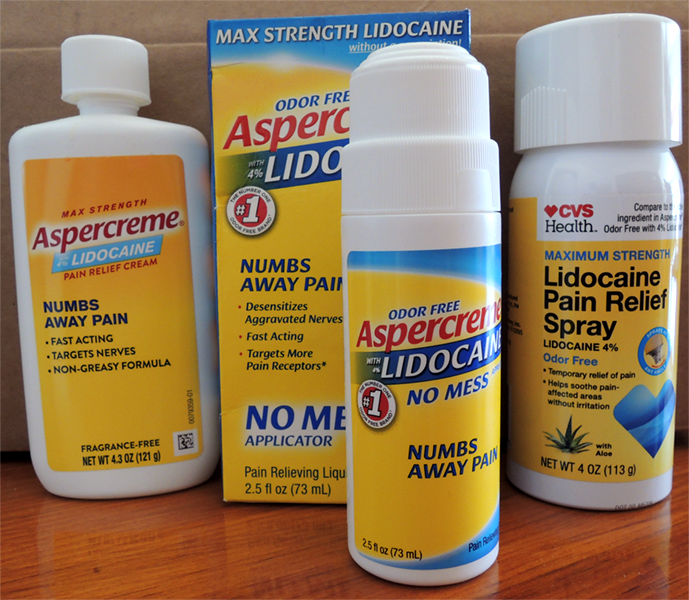
Over the counter. (See photo below). Notice that the box for the roll-on version (center) is twice the width of the roll-on itself. Lidocaine numbed our son’s intense burning skin pain.
The lotion version also soothed and cooled the area. The spray is for hard-to-reach areas.
If you do you use the lotion, you will have to work it in, so wear disposable gloves because your hands will feel funny from the numbing.
The roll-on version doesn’t cover the area well, and you might have to spread it around with a finger anyway.
If you have to spray the scalp and the person has lots of hair, hold the spray nozzle almost against the scalp. Don’t hold the nozzle away from the head and spray (unless the ALS victim has no hair or short hair). After you’ve sprayed, work it onto the scalp with your fingers (wear gloves).
Itching
The same application advice applies to the following two medications. If the ALS victim has lots of hair, hold the spray nozzle very close to the scalp when you apply it. Otherwise, it’ll just coat the hair and not penetrate. These two come in creams, but the skin will be greasy.
Ivarest
OTC poison ivy spray. It worked very quickly. Wear disposable gloves when applying.
I use it on myself, too, because I have eczema. See photo below.
Mometasone Furoate
Prescription. We used the lotion version, which worked slower than Ivarest, but it was effective when Ivarest didn’t work.
Wear disposable gloves when applying. See photo below.
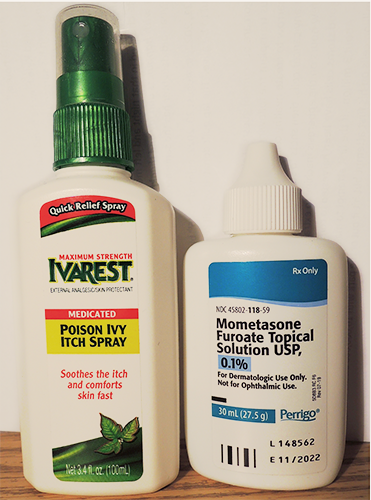
Left: Ivarest Poison Ivy Spray (OTC). Available at Ivarest.
Right: Mometasone Furoate (Rx only). Available at TCC.
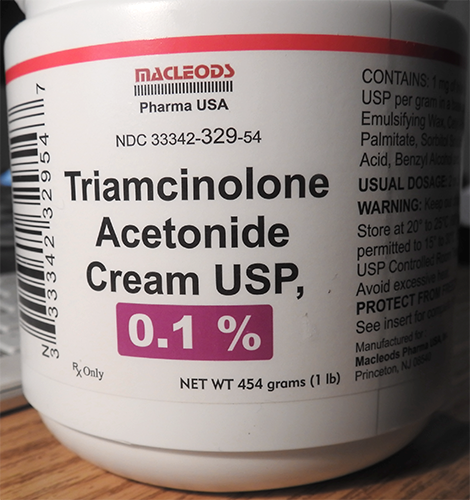
Triamcinolone Acetonide
From my own severe itching misery due to eczema, my dermatologist prescribed triamcinolone acetonide (see photo below). Brand names include Aristocort, Aristocort Hp, Kenalog, and Triderm.
To apply, I put on disposable gloves and apply a thin coat to the affected area (both legs) right before bed. This medicine has worked really well for me.
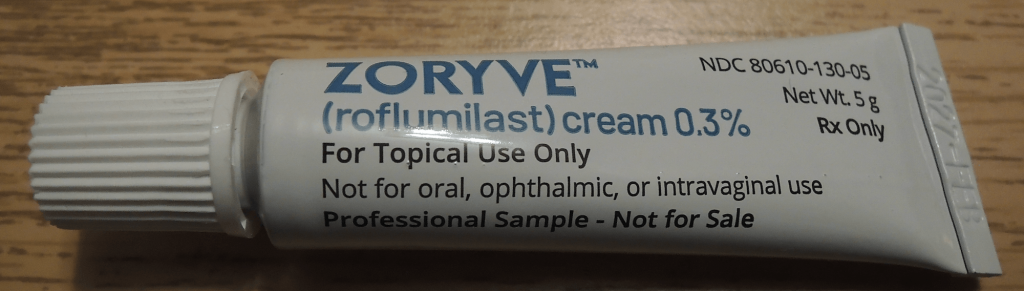
Zoryve
My dermatologist prescribed for severe eczema itching on the tops of both of my ears (of all places) Zoryve. I only need a tiny amount and it works instantly.
Fluocinonide
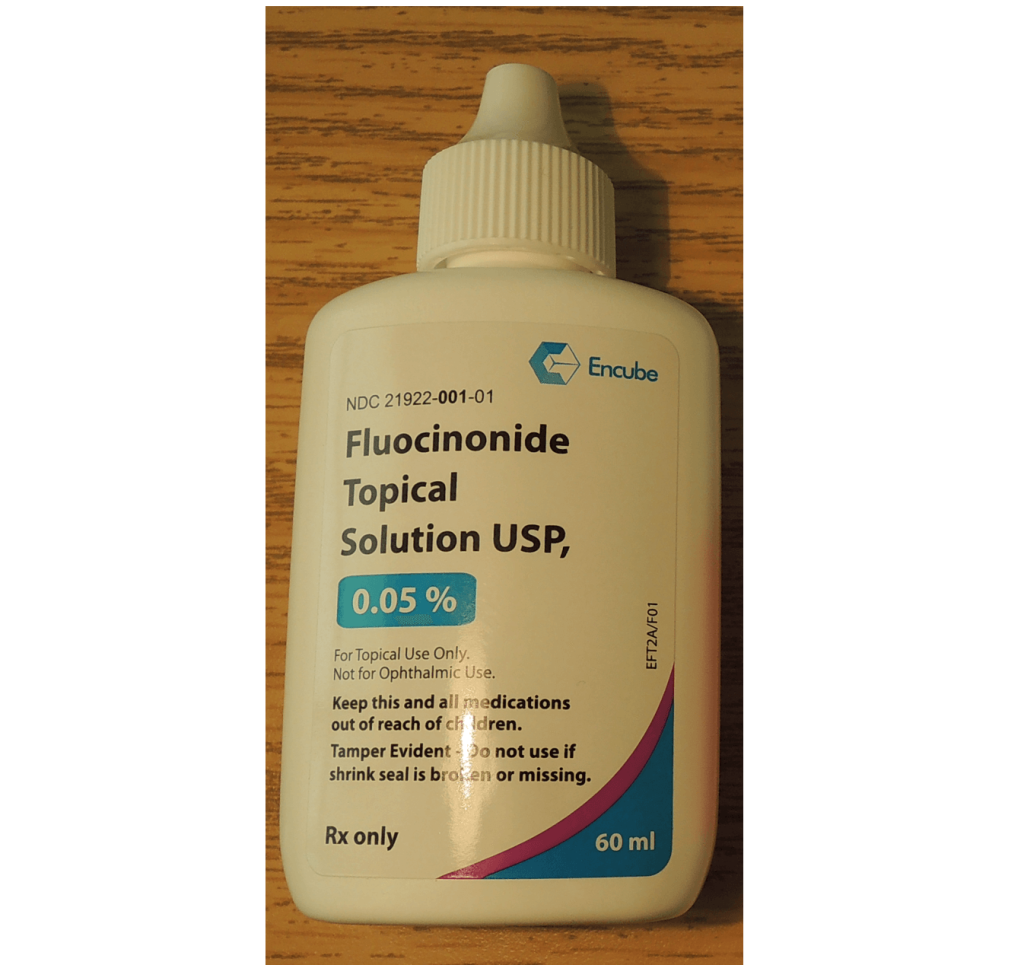
Another prescription medicine for itching to try: Fluocinonide was prescribed to my wife, (who does not have ALS) for severe itching of unknown cause on her scalp.